
Rotary Endodontics
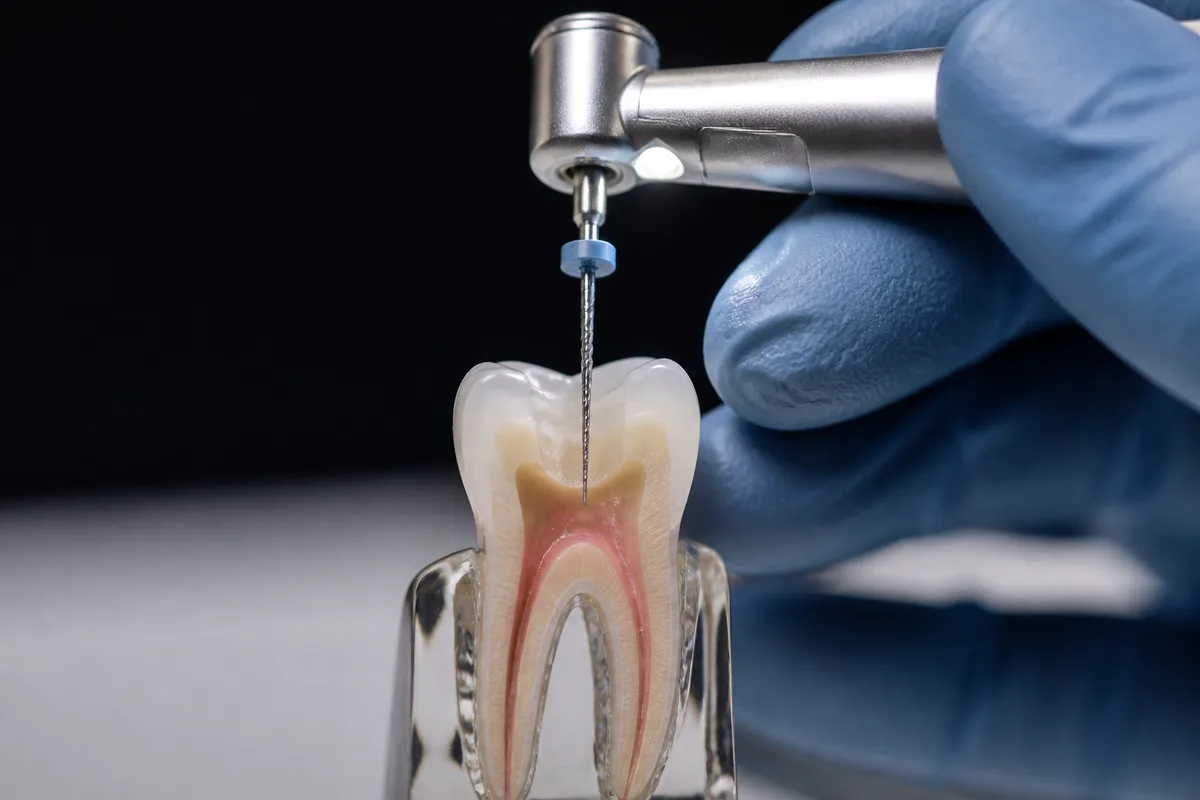
Rotary Endodontics
When a tooth's nerve becomes inflamed or infected, root canal treatment is often the way to save it. At 1st Family Dental, that treatment is carried out with rotary endodontic instruments — electric, motor-driven files that shape and clean the inside of a tooth's root canals more efficiently than older hand-filing methods.
What rotary Endodontics is
Rotary endodontics refers to the use of flexible, motor-driven files — usually made of nickel-titanium — to clean out and shape the root canal system inside a tooth. A small electric handpiece turns the file at a controlled speed and torque, allowing it to follow the natural curves of a root canal rather than forcing a straight path through it.
This approach improved on traditional stainless-steel hand files, which had to be twisted and worked through the canal by hand, one file size at a time. Because rotary files flex with the shape of the root and move at a steady, controlled speed, they tend to remove infected or damaged tissue more evenly and in less time than manual filing alone.
How we use it at 1st Family Dental
Root canal treatment at 1st Family Dental is performed using rotary instruments, and it's paired with other on-site tools that support accurate, well-planned care. An Electronic Apex Locator is used to measure the length of each root canal precisely, so the dentist knows exactly how far to work without relying on extra x-rays. Digital X-Rays and, where a tooth's anatomy calls for more detail, 3D Cone Beam CT Imaging help the dentist see the roots and surrounding bone clearly before and during treatment.
Several of our general dentists have pursued continuing education specifically in endodontics as part of their broader training. Dr. Sasa Stojanovic notes her enjoyment of using the latest technologies in endodontics, Dr. Kenneth Lee has focused his continuing education on the specialty, and Dr. Lawrence Velano received advanced training in endodontics during his time in the U.S. Naval Dental Corps. For patients who feel anxious about treatment, Nitrous Oxide Sedation is also available on site.
What it means for you
For patients, rotary instruments generally translate into a smoother, more predictable procedure. Because the files move at a steady, motor-controlled pace and flex with the shape of the canal, treatment can often be completed with fewer changes of instrument and less time in the chair than older manual methods required.
A more evenly cleaned and shaped canal can also make it easier for the dentist to seal the space thoroughly, which matters for the long-term health of the tooth. And because measurements are taken electronically rather than through repeated x-rays, treatment can proceed with clear information at each step.
What to expect during your visit
A root canal visit typically begins with a review of your x-rays or scans and a local anesthetic to numb the area, so you're comfortable throughout. If you feel anxious, nitrous oxide can help you relax before the dentist begins.
Once you're numb, the dentist opens a small access point in the tooth and uses the electronic apex locator to measure each canal. The rotary handpiece is then used to clean and shape the canals, removing damaged tissue. Afterward, the canals are sealed and the access point is filled, often with a temporary filling until a permanent crown or restoration can be placed. Most root canal appointments are completed in one to two visits, depending on the tooth and how many canals it has.
Frequently asked questions
Is rotary endodontic treatment safe?
Yes. Rotary files are a standard, well-established way to clean and shape root canals, and the equipment is used alongside digital imaging and electronic measurement tools to guide the dentist precisely. Local anesthetic keeps the area numb throughout the procedure.
How long does a root canal take with rotary instruments?
Treatment length depends on the tooth and how many canals it has, but rotary instruments generally allow the dentist to shape canals more efficiently than hand filing. Many root canals can be completed in a single visit, though some cases require a follow-up appointment.
Will I need sedation for a root canal?
Local anesthetic is used to numb the tooth for every root canal. If you feel anxious about dental visits, nitrous oxide is also available on site to help you relax during treatment.
Who is a candidate for root canal treatment?
Root canal treatment is typically recommended when a tooth's nerve is inflamed or infected, often due to deep decay, a crack, or repeated dental work on the same tooth. Your dentist can tell you whether root canal treatment or another option is right for your specific tooth after an exam and imaging.
If you're dealing with tooth pain or have been told you may need a root canal, reach out to 1st Family Dental to ask about rotary endodontic treatment and schedule a visit.