
Panoramic X-Rays
Panoramic X-Rays
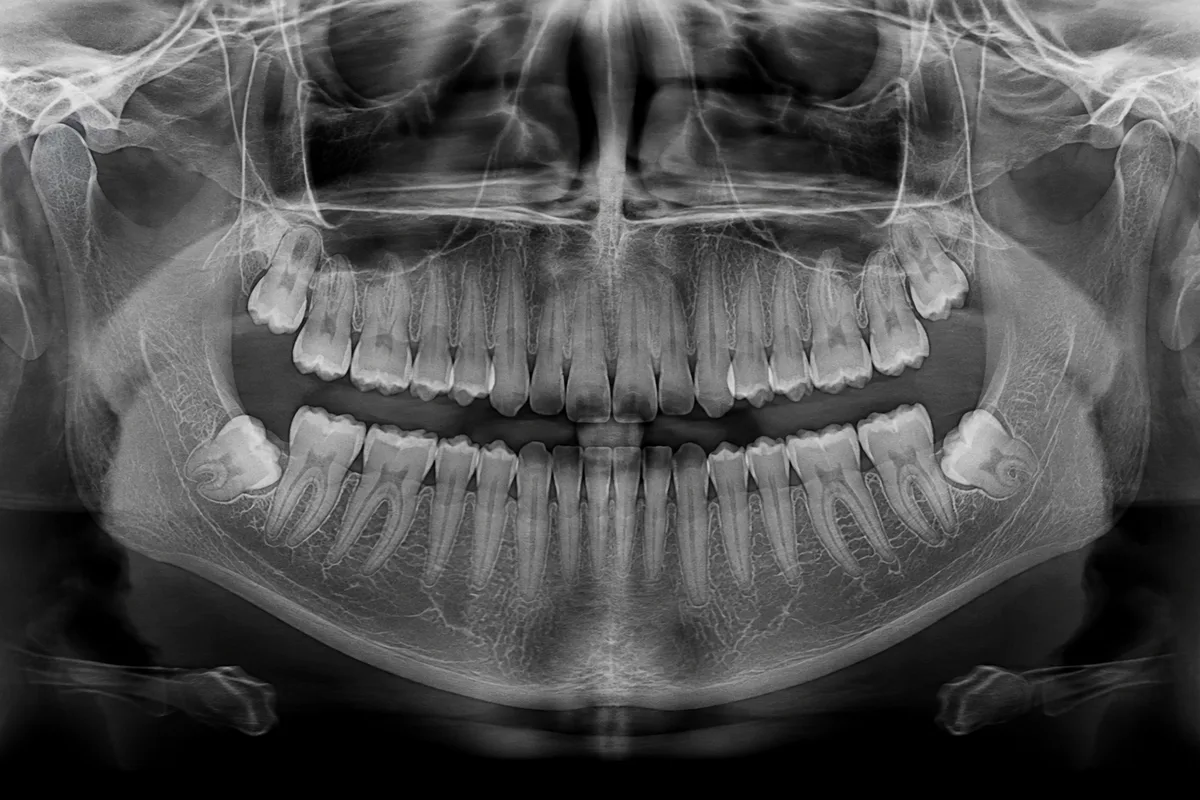
A panoramic X-ray gives your dentist a single wide view of your entire mouth, jaw, and surrounding structures in one image. It's a quick, comfortable way to see how your teeth, jawbone, and sinuses relate to each other — information that's simply not visible on a standard dental exam or a small bitewing X-ray.
What panoramic X-Rays is
Panoramic X-ray imaging uses a rotating arm that moves around the head, capturing a curved, two-dimensional image of the upper and lower jaws, all the teeth, the sinuses, and the temporomandibular joints in a single pass. Because the machine circles the outside of the head rather than requiring film placed inside the mouth, it avoids the gagging or discomfort some people feel with traditional intraoral X-rays.
This type of imaging improved on older methods that required multiple individual films to piece together a full picture of the mouth. A single panoramic image lets a dentist see the position of unerupted or developing teeth, the presence and alignment of wisdom teeth, jawbone structure, and any cysts or other abnormalities — all without a separate exposure for each area.
How we use it at 1st Family Dental
At 1st Family Dental, panoramic X-rays are one part of a broader digital imaging setup that also includes Digital X-Rays for close-up views of individual teeth and 3D Cone Beam CT Imaging for procedures that require a more detailed, three-dimensional picture, such as implant or surgical planning. A panoramic image is often the first wide-view step that helps determine whether more detailed imaging is needed.
Because panoramic imaging shows the whole jaw at once, it's commonly used to check the position and development of wisdom teeth, assess growing or developing teeth in younger patients, and get an overview of bone levels before implant or orthodontic treatment planning begins. Where a case calls for surgical precision — for example, guided implant placement — the panoramic view can be a starting point before more detailed 3D scans are taken.
What it means for you
A panoramic X-ray typically means fewer separate images are needed to get a full picture of your mouth, which can save time in the chair. Because it's captured from outside the mouth, it tends to be more comfortable for patients who find intraoral X-rays uncomfortable, including those with a strong gag reflex or smaller mouths, such as children.
Digital imaging generally involves less radiation exposure than older film-based X-rays, and the image appears on screen almost immediately, so your dentist can review it with you and explain what they see in plain terms. This can make it easier to understand your own treatment options and ask informed questions before deciding on next steps.
What to expect during your visit
No special preparation is usually needed before a panoramic X-ray. You'll be asked to remove any jewelry, glasses, or removable dental appliances that might interfere with the image, and you may be given a lead apron for protection. You'll stand or sit in front of the machine and bite down gently on a positioning guide to keep your head still.
The machine's arm will rotate slowly around your head while the image is captured — the whole process usually takes less than a minute, and you won't feel anything during the scan itself. Once complete, the image appears on a computer screen right away, and your dentist can review it with you as part of your exam or treatment consultation.
Is a panoramic X-ray safe?
Panoramic X-rays use a low dose of radiation, and digital imaging further reduces exposure compared with older film-based systems. A lead apron is typically used for extra protection, and the scan itself only takes moments to complete.
How often will I need one?
How frequently a panoramic X-ray is needed depends on your age, dental history, and any specific concerns, such as wisdom teeth monitoring or orthodontic or implant planning. Your dentist will let you know if and when a repeat image is appropriate for your situation.
Is it uncomfortable?
Most patients find panoramic X-rays more comfortable than traditional intraoral X-rays, since no film is placed inside the mouth. You simply bite down on a guide and stay still briefly while the machine rotates around your head.
Who is it suitable for?
Panoramic X-rays are suitable for patients of nearly any age, including children with developing teeth, teens and adults being evaluated for wisdom teeth, and patients being considered for implants, orthodontics, or oral surgery. Your dentist will determine whether this type of imaging fits your particular needs.
If you'd like to learn more about panoramic X-rays or find out whether one is right for your next visit, reach out to 1st Family Dental — we're happy to answer your questions.