
Oral Cancer Screening Light
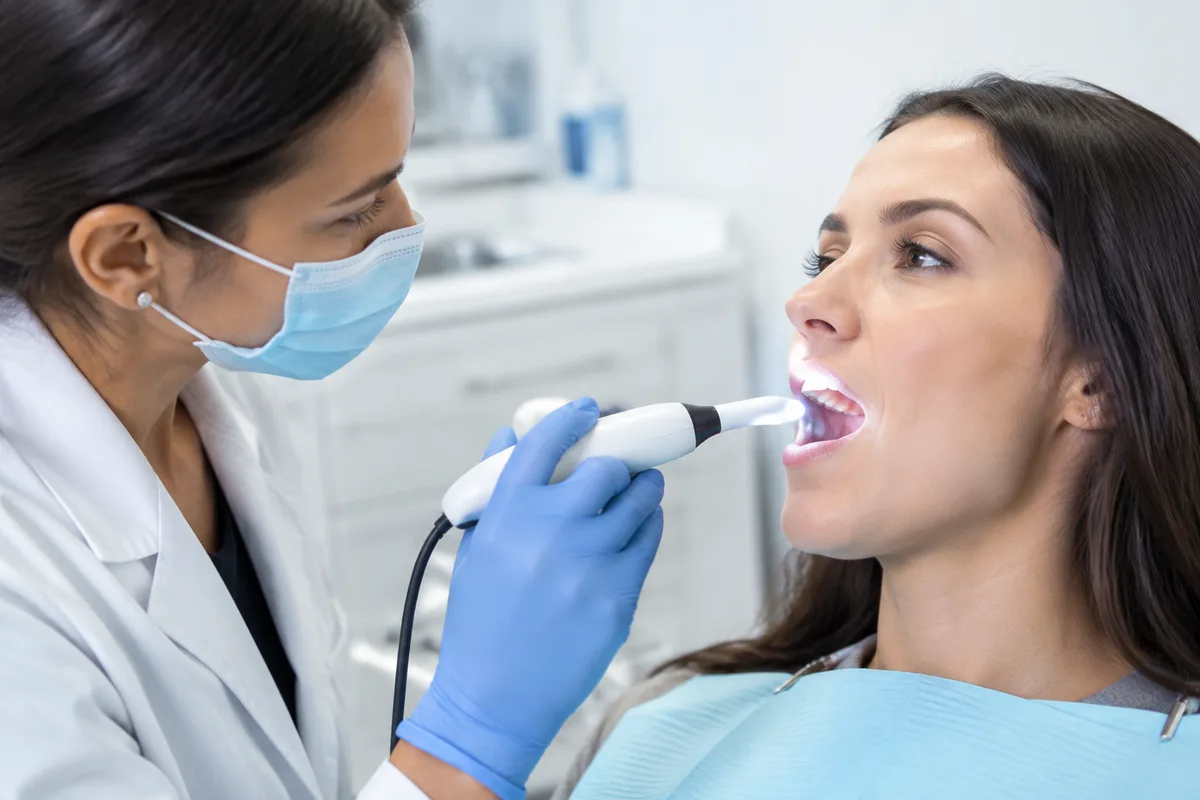
Oral Cancer Screening Light
An oral cancer screening light is a simple, non-invasive tool that helps your dental team take a closer look at the soft tissues of your mouth during a routine visit. At 1st Family Dental in Chicago, IL, this light is used alongside a standard visual and physical exam as part of the care our dentists and hygienists already provide.
What oral Cancer Screening Light is
The screening light works by shining a specific wavelength of light across the tissues of the mouth, cheeks, tongue, and throat. Healthy tissue tends to reflect this light in a consistent, predictable way, while tissue changes can appear differently under the same light, making certain irregularities easier to notice than under regular room lighting alone.
This kind of light-based screening is meant to add another layer of observation to the traditional visual and manual exam that dentists have long performed by hand and eye. It does not replace that exam — it works alongside it, giving the dental team an additional way to look at tissue that might otherwise seem unremarkable under normal light.
How we use it at 1st Family Dental
At 1st Family Dental, the oral cancer screening light is used as part of a comprehensive look at the soft tissues in your mouth. It complements the tools already available in our offices, including intraoral cameras that let you see what your dentist sees, and digital and panoramic x-rays that give a broader picture of your teeth, jaw, and surrounding structures.
Because oral cancer screening is one of the services offered across our practice, this light is typically incorporated into routine visits such as dental exams and cleanings, rather than requiring a separate appointment. Your dentist or hygienist can walk you through what they observe and explain next steps clearly, using the intraoral camera if helpful, so you understand what was checked and why.
What it means for you
For patients, a light-based tissue exam adds a few extra minutes to a visit you are already having, without discomfort or preparation. It is a straightforward way to keep an eye on the soft tissues of the mouth over time, alongside the other checks that happen at every appointment.
Because it can be built into a regular exam or cleaning, it does not usually mean an extra trip to the office. It also gives your dental team a clearer basis for explaining what they see, which can make conversations about any follow-up more specific and easier to understand.
What to expect during your visit
Before the screening, your dentist or hygienist will typically complete the usual visual and manual exam of your mouth, cheeks, tongue, lips, and throat. The screening light itself is then used briefly to view these same areas under its specific wavelength — you may be asked to open wide, move your tongue, or turn your head slightly so different areas can be checked.
During the screening, there is no discomfort, no numbing, and no sound or vibration — it is simply a light held near the tissue for a short period. The entire process usually adds only a few minutes to your appointment. Afterward, your dentist will let you know what was observed, and if anything warrants a closer look or follow-up, they will explain what that next step would involve.
Frequently asked questions
Is the oral cancer screening light safe?
Yes. The light used is not the same as x-ray radiation — it is a visible or near-visible light directed briefly at the soft tissues of the mouth. There is no needle, no numbing, and nothing to prepare beforehand.
Does it hurt or feel uncomfortable?
No. The screening involves your dentist or hygienist briefly shining the light around your mouth while you open wide or move your tongue as directed. Most patients feel nothing more than the light itself.
How long does it take, and how often is it used?
The screening itself typically takes just a few minutes and is usually built into a regular dental exam or cleaning rather than scheduled as its own appointment. How often it is used as part of your visits is something to discuss with your dentist based on your individual needs.
Who is this screening suitable for?
This type of screening is generally suitable for adult patients as part of a routine dental visit. Your dentist can tell you more about whether it fits into your particular care plan during your appointment.
If you have questions about the oral cancer screening light or would like it discussed at your next visit, reach out to 1st Family Dental — we are happy to talk you through it.