
iTero Element Scanner
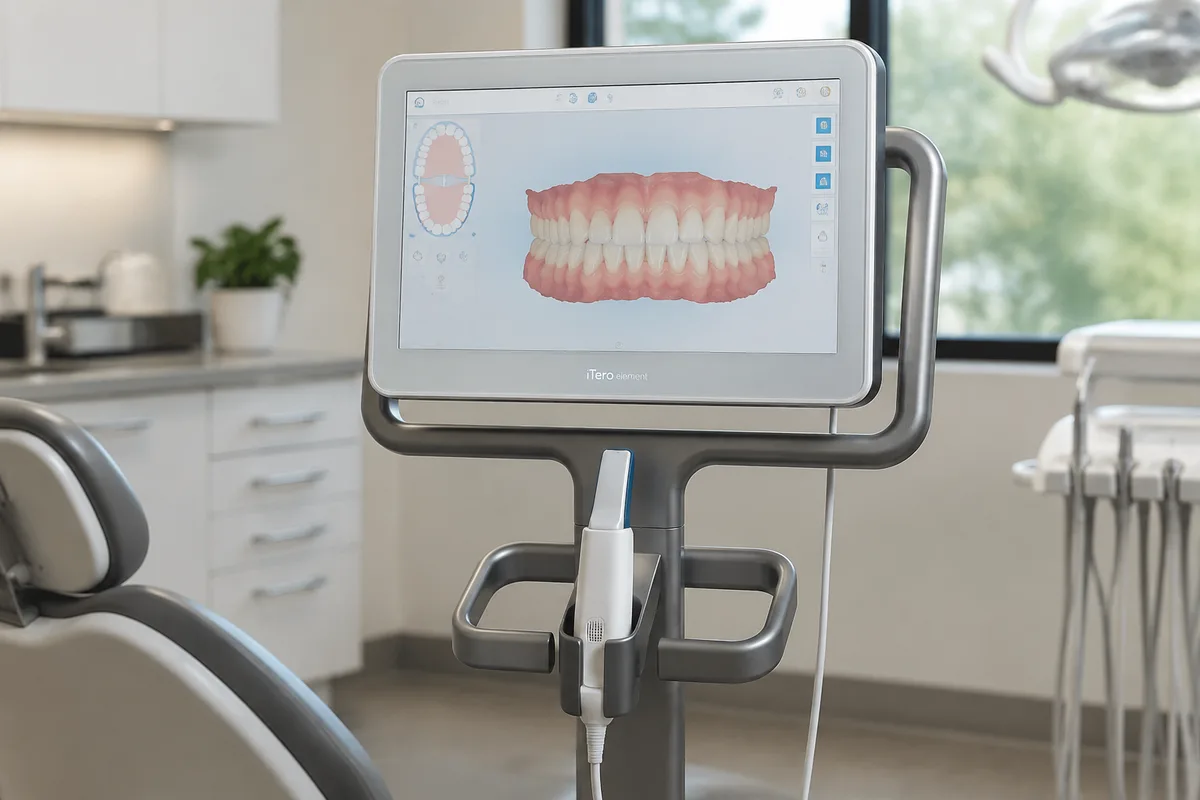
iTero Element Scanner
The iTero Element Scanner is a digital impression system that captures a detailed 3D model of your teeth and gums — no messy putty, no gagging, and a simulation of your potential post-treatment smile. It's a tool many patients encounter before starting orthodontic treatment, planning a crown or veneer, or exploring what a straighter smile might look like.
What iTero Element Scanner is
A digital scanner works by passing a small wand over the teeth and gums, building a highly detailed 3D image on screen in real time. This replaces the traditional method of biting into a tray of putty-like material, which many patients find uncomfortable and which can distort slightly as it sets and is removed.
Because the resulting model is digital, it can be viewed, measured, and shared instantly, rotated on screen, and used directly by the lab or clinician planning your treatment — whether that's a crown, a set of aligners, or an implant restoration. It's a step in the broader shift toward digital, CAD/CAM-based dentistry that many practices, including this one, have adopted alongside other imaging tools.
How we use it at 1st Family Dental
At 1st Family Dental, the iTero Element Scanner is used to capture a 3D model of your bite as part of planning treatment — including previewing what your smile may look like after treatment is complete. Several of our dentists have training specific to this kind of digital scanning and CAD/CAM technology: Dr. Michael Fakhouri is well-versed in scanners and CAD/CAM technology as part of his broader training in restorative and implant dentistry, and Dr. Sreynoch Hun has experience working with cutting-edge CAD/CAM technology in her restorative and cosmetic work.
Our orthodontic team also relies on digital scanning as part of planning Invisalign clear aligner treatment, since aligner cases are typically mapped out from a scan like the one the iTero Element Scanner produces. The scan can also feed into our Digital Smile Preview, giving you a look at a simulated result before treatment begins. Depending on your treatment plan, a scan may be used alongside other on-site imaging, such as 3D Cone Beam CT imaging or digital x-rays, though these serve different purposes and aren't always needed together.
What it means for you
For most patients, the biggest difference is comfort — there's no tray of material to bite into and hold in place, and no gag reflex to manage. The scan itself is generally quick, and there's nothing to wait for it to "set."
Because the model is digital, it's also easy for your dentist to review with you on screen, point out areas of concern, and explain a proposed treatment. If a lab or aligner provider needs your scan, it can typically be sent electronically, which can help avoid delays that come with shipping a physical impression.
What to expect during your visit
There's little to prepare beforehand — you don't need to avoid eating or drinking, and no numbing or sedation is involved. Your dentist or hygienist will guide a small wand around your teeth and gums, capturing images from multiple angles as the 3D model builds on the screen in front of you.
The scan itself is typically completed within a few minutes. You may be asked to bite together at certain points so the system can capture how your upper and lower teeth meet. Once finished, your dentist can review the model with you right away, and, depending on your treatment, show you a simulated preview of a planned result. Afterward, you're free to go about your day — there's no recovery time needed.
Is the iTero scan safe?
Yes. The scanner uses light and imaging technology to capture the shape of your teeth and gums — there is no radiation involved, unlike x-rays. It's considered a safe, non-invasive way to record a 3D model of your mouth.
Will the scan be uncomfortable?
Most patients find it more comfortable than a traditional putty impression, since there's nothing to bite into or hold in your mouth while it sets. The wand is guided over your teeth while you sit comfortably, and you can breathe and swallow normally throughout.
How long does a scan take?
A typical scan takes only a few minutes to complete, though the exact time can vary depending on how much of your mouth needs to be captured and whether both the upper and lower arches are being scanned.
Who is the scanner used for?
The scanner is generally suitable for both teenagers and adults being evaluated for treatments such as Invisalign, crowns, veneers, or other restorative and cosmetic work. Your dentist can let you know whether a digital scan is appropriate for your particular treatment plan.
If you'd like to see how a digital scan could fit into your treatment plan, reach out to 1st Family Dental to ask about the iTero Element Scanner.