
Intraoral Cameras
Intraoral Cameras
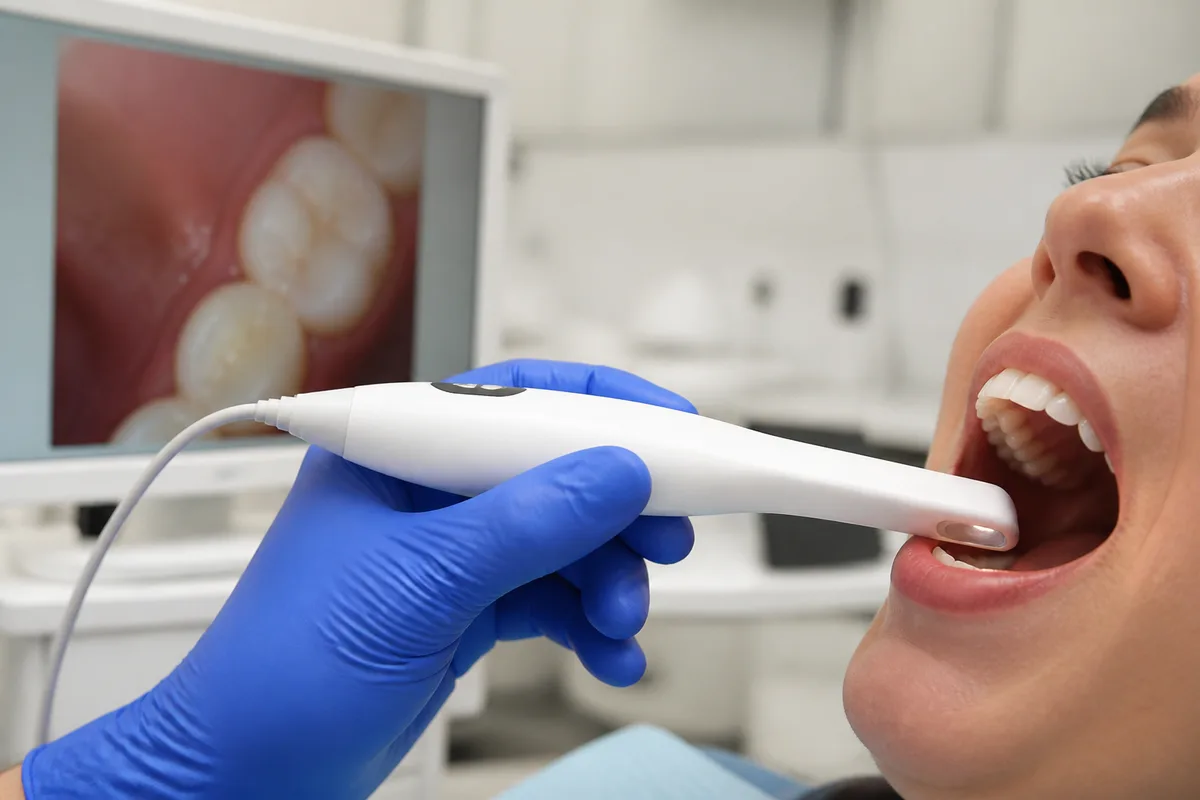
An intraoral camera is a pen-sized camera that shows you exactly what the dentist sees, so you can make informed decisions about your care. At 1st Family Dental in Chicago, IL, this small tool is part of everyday exams and cleanings, helping turn a routine checkup into a clear, visual conversation about your teeth and gums.
What intraoral Cameras is
An intraoral camera is a slim, handheld wand fitted with a small lens and light at the tip. It fits comfortably inside the mouth and captures close-up, magnified images of teeth, gum tissue, and other structures that are otherwise difficult to see with the naked eye. The images appear instantly on a chairside monitor.
Before cameras like this became common, patients had to rely on a dentist's verbal description or a hand-held mirror to understand what was happening in their mouth. A cracked filling, an early cavity, or a spot of gum inflammation might be mentioned but never actually seen. The intraoral camera changes that by giving patients a direct, real-time view of the same picture the dentist is looking at, in a format that is easy to understand without any dental training.
Because the camera produces a digital image rather than film, it can be saved, magnified, and compared against future pictures, making it a natural complement to other digital tools used to plan and track dental care.
How we use it at 1st Family Dental
At 1st Family Dental, intraoral cameras are used during exams and cleanings to point out areas of concern as they are found, rather than describing them after the fact. This can include showing a patient a worn filling, a chipped tooth, or a area of gum recession on the monitor in real time.
The camera works alongside other imaging tools available on site. Where digital X-rays reveal what is happening beneath the surface, the intraoral camera shows the surface itself in detail. Together with tools like the iTero Element Scanner and Digital Smile Preview, it contributes to a fuller, visual picture of your mouth that supports discussions about preventive care, restorative work, or cosmetic treatment. Images captured during your visit become part of your record in our electronic health system, so your dental team can reference them at future appointments.
What it means for you
Seeing your own teeth on a screen makes it easier to understand why a particular treatment is being recommended. Instead of taking a diagnosis on faith, you can look at the same image your dentist is describing, which tends to make conversations about treatment options clearer and more collaborative.
The camera itself is non-invasive and does not use radiation, so it can be used as often as needed without any added exposure. It also allows small changes, such as the early stages of a cavity or gum irritation, to be documented and monitored over time, which can support catching issues earlier rather than waiting until they become noticeable on their own.
What to expect during your visit
During a routine exam or cleaning, the dental team may glide the camera wand gently along the outside and inside surfaces of your teeth and gums. There is no pressure, discomfort, or unusual sensation involved; most patients simply feel the smooth tip briefly resting against different areas of the mouth.
As images appear on the monitor, your dentist or hygienist can pause to point out specific spots, such as a stained tooth, a hairline crack, or an area of plaque buildup near the gumline. This part of the visit typically adds only a few minutes to your appointment. Afterward, the images are saved to your chart, and your dentist can use them to explain any recommended next steps, whether that is a filling, a cleaning adjustment, or simply a note to keep an eye on an area at your next visit.
Frequently asked questions
Is an intraoral camera exam safe?
Yes. The camera uses only light and a lens to capture images, with no radiation involved, so it is considered a safe tool that can be used as frequently as your dental team finds helpful.
Does the camera feel uncomfortable?
Most patients find the camera comfortable. The wand is small and smooth, and it is simply guided along the surfaces of your teeth and gums without any pressure or sound that would cause discomfort.
How long does it add to my appointment?
Capturing images typically takes just a few minutes and is done as part of your regular exam or cleaning, so it does not usually extend your visit by much.
Who is this suitable for?
Intraoral camera imaging is suitable for patients of nearly any age, since it involves no radiation and no special preparation. It is commonly used during general checkups as well as when evaluating a specific concern, such as a suspected cavity or gum issue.
If you would like to see your own dental exam on screen, reach out to 1st Family Dental to ask about scheduling a visit that includes intraoral camera imaging.