
Digital X-Rays
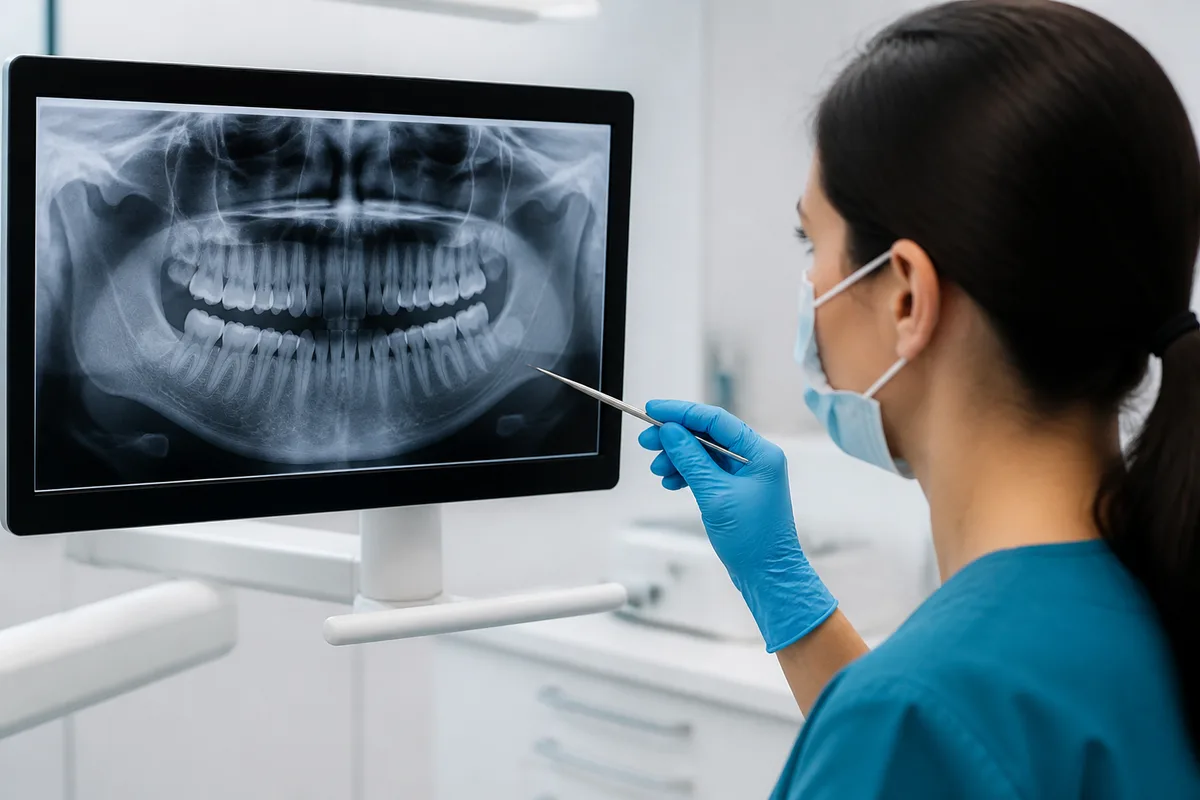
Digital X-Rays
Digital X-rays are one of the most routine yet essential tools in modern dentistry, giving our team a clear look beneath the surface of your teeth and gums. At 1st Family Dental in Chicago, digital X-rays are part of nearly every checkup, helping us catch issues early and plan treatment with confidence.
What digital X-rays is
Digital X-rays use a small sensor placed in or near the mouth to capture an image of the teeth, roots, and supporting bone, which appears almost instantly on a computer screen. This replaces older film-based X-rays, which required chemical processing and a longer wait before the dentist could see the results.
Because the sensor is more sensitive than traditional film, digital X-rays typically require a lower dose of radiation to produce a usable image. The images can also be enlarged, adjusted for contrast, and stored electronically, making it easier to compare a tooth or area over time.
How we use it at 1st Family Dental
Our team reviews digital X-rays at every checkup to spot problems early, with far less radiation than traditional film. These images help identify decay between teeth, bone changes around the gums, and other issues that aren't visible during a routine visual exam.
Digital X-rays often work alongside other on-site tools. Panoramic X-Rays give a single wide view of the whole mouth and jaw, useful for checking wisdom teeth or developing teeth, while 3D Cone Beam CT Imaging provides a three-dimensional view for more complex planning, such as before dental implants or oral surgery. An Electronic Apex Locator can measure root canal length during endodontic treatment without the need for additional X-ray images. Findings from digital X-rays are also kept in our Electronic Health Records, so your history is available to our team at any of our offices.
What it means for you
For patients, digital X-rays generally mean less waiting, since images appear on screen right away instead of needing to be developed. The lower radiation dose compared with traditional film is a meaningful safety advantage, particularly for patients who need X-rays taken periodically over the years.
Clear digital images also make it easier for your dentist to explain what they're seeing, since the picture can be enlarged and reviewed with you directly on the screen. This can support more informed conversations about whether a filling, crown, root canal, or other treatment may be needed.
What to expect during your visit
Before the X-ray, you'll typically be given a lead apron or thyroid collar for extra protection. A small sensor is placed inside the mouth, positioned to capture the specific tooth or area being examined, and you'll be asked to hold still for a moment while the image is taken.
The process itself is quick and generally causes no discomfort, though some patients feel mild pressure from the sensor against the teeth or gums. Once captured, the image appears on the computer screen almost immediately, allowing your dentist to review it with you as part of your exam.
Frequently asked questions
Are digital X-rays safe?
Digital X-rays use significantly less radiation than older film-based X-rays, making them a safer option for routine dental monitoring. Protective gear such as a lead apron is also used during the process. Your dentist will only recommend X-rays when they're genuinely useful for diagnosis or treatment planning.
How often will I need digital X-rays?
How often X-rays are needed depends on your individual oral health, age, and history of dental issues. Some patients need them at every routine checkup, while others may only need them periodically. Your dentist can explain the recommended schedule based on what they see during your exam.
Is the process uncomfortable?
Digital X-rays are generally quick and well tolerated. You may feel the sensor pressing gently against your teeth or gums for a moment, but the process itself does not involve any pain, and each image is captured within seconds.
Who are digital X-rays suitable for?
Digital X-rays are suitable for most patients, including children and adults, as part of routine dental exams. They're also used to support more specific treatment, such as evaluating a tooth before a filling or crown, checking on root canal therapy, or planning ahead of oral surgery or dental implants.
If you'd like to learn more about digital X-rays or are due for a checkup, reach out to 1st Family Dental to schedule a visit.